I’ve spent eleven years working in the bathroom retail industry, and if there is one thing I’ve learned, it’s that we are all chasing the same ghost: the feeling of a five-star hotel bathroom in our own homes. You know the feeling. You walk in, the light is soft, the air feels slightly more expensive, and for those five minutes before you check out, you aren’t just a tired traveller—you are someone who has their life perfectly in order.
Most of us head home, look at our own bathroom, and see a graveyard of half-used moisturiser bottles, a vanity that’s seen better days, and a lighting situation that feels less "luxury spa" and more "interrogation room." But here’s the secret: the difference between your bathroom and the one in a high-end hotel isn't always a $30,000 renovation. It’s usually about five specific design choices that have nothing to do with ripping up tiles and everything to do with intent.
1. The Art of Layered Lighting
If there is one hill I am willing to die on, it is this: stop relying on a single, harsh overhead light. In the retail showroom, I saw clients consistently overlook this, opting for a single "bright" light that casts shadows directly under your eyes modern bathroom vanity and nose. It’s unflattering, and it’s the quickest way to kill the mood.
Hotels use layered lighting. They treat the bathroom like a living room, not a surgical theatre. You need three distinct zones:
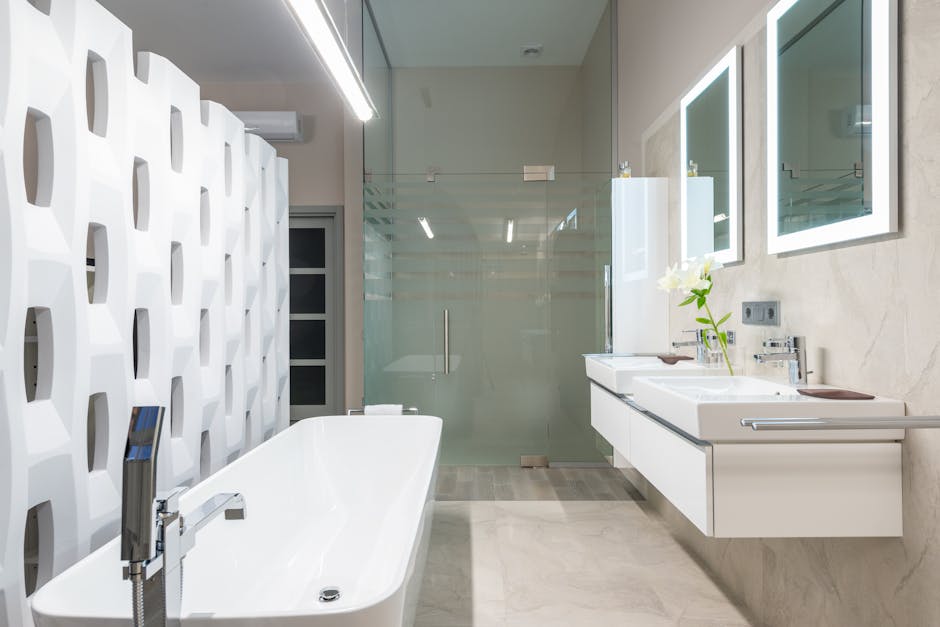
- Ambient Lighting: Your base layer. A soft, dimmable glow that fills the room without glare. Task Lighting: Placed around your statement mirror. This is where you actually shave or apply skincare. It should be diffused, not pointed like a spotlight. Accent Lighting: This is the "luxury" layer—perhaps an LED strip under the vanity or a subtle wall-wash light that draws the eye to a piece of art or a textured tile.
By moving away from that single, clinical bulb, you immediately soften the psychology of the space. It stops being a place to 'get clean' and starts being a place to 'reset.'
2. The Mirror as a Focal Point
I cannot stress this enough: your mirror is not just a piece of glass to check your teeth in. It is the architectural anchor of the room. A minimalist design relies heavily on a high-quality, perfectly placed mirror to create the illusion of space and depth.
Too many people choose a mirror based solely on size, ignoring the frame or the integrated technology. If you are renovating or just refreshing, look at options from LED Mirror World. The reason I mention them is that their designs often integrate the lighting into the mirror itself, which solves the "shadow" problem I mentioned earlier. When you look for a mirror, consider the colour temperature. You want something that mimics natural daylight—not the sickly yellow of an old-school halogen bulb.
The "Mirror Placement" Rule
In my decade of consults, I’ve seen mirrors placed in ways that create "dead zones." The best placement is usually at eye level, ensuring the bottom of the mirror is at least 15–20cm above the vanity benchtop to prevent water splash and condensation damage. If you’re stuck, keep it simple. A large, frameless or back-lit mirror will almost always outperform a decorative, ornate one in a small Australian bathroom.
3. The Psychology of Minimalism
Walk into a hotel bathroom. What do you see on the benchtop? Usually, just a small tray with a soap dispenser and maybe a vase. You don’t see four types of shampoo, a pile of hair ties, and a damp towel draped over the shower screen.
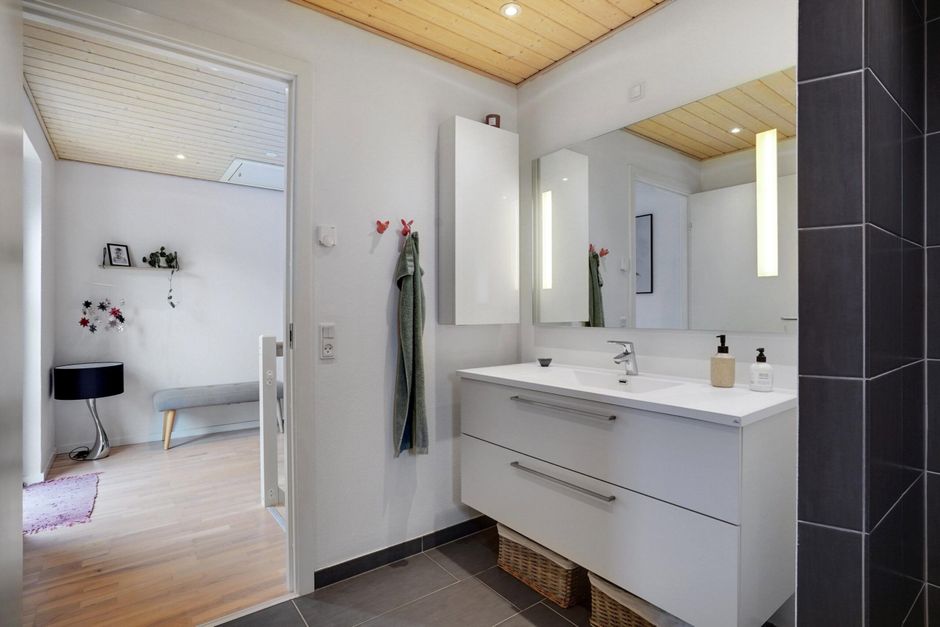
Minimalism isn't about having nothing; it's about having nothing *on display*. The psychology of luxury is built on simplicity. If you want to replicate that hotel feeling, your first step isn’t buying new tiles—it’s buying new storage. If your vanity is overflowing, you need a medicine cabinet or a recessed niche in the wall. You cannot cultivate a sense of calm in a space that feels cluttered.
4. The Ritual of Sensory Details
We often treat the bathroom as a functional space, but hotels treat it as a ritual space. When you look at high-end lifestyle imagery on platforms like Shutterstock, you’ll notice that the bathrooms never look like "storage closets." They look like sanctuaries. They use textures to signal quality: a plush, heavy towel, a natural stone tray for soap, or a plant that brings a bit of life into the room.
I keep a running list of "small changes that change the whole room" on my desk. Here are a few that make a massive difference without the need for a trade:
The Item The "Hotel" Shift Towels Switch to matching, high-GSM white towels. No mix-and-match patterns. Soap Decant generic supermarket soap into a matching glass or ceramic pump. Lighting Change your bulb temperature to a consistent 3000K (warm white) throughout. Hooks Swap a bulky towel rack for sleek, individual hooks to reduce visual clutter.5. The Reality of the Budget (And the Missing Price Tags)
I recently spent a morning browsing for inspiration online. Like many of you, I find myself frustrated when I click through to an article or a resource site—like the Bendigo Advertiser—only to find the content is behind a subscription or, worse, a beautiful spread of home inspiration with absolutely no pricing information.
As a former consultant, I find the industry’s refusal to publish prices irritating. It feeds the "just renovate" marketing buzz that assumes every homeowner has an unlimited budget and an endless amount of time. Let me be clear: you do not need to spend five figures to change the "vibe" of your bathroom.
When you encounter a piece of content that refuses to list costs, take it with a grain of salt. Marketing language loves to push "full luxury renovations" because that’s where the high-ticket commissions are. If a resource tells you that you *need* imported Italian marble to achieve a minimalist look, they are selling you a dream, not a reality. You can achieve a refined, high-end look through better lighting, decluttering, and strategic hardware upgrades—all of which fall under the category of "doable, non-renovation adjustments."
A Note on Navigating Industry Content
If you are frustrated by the lack of transparency in online home-design content, you aren't alone. When you hit a paywall, like the Bendigo Advertiser subscription/login flow, remember that you are often paying for local news, not necessarily a price-list for your DIY project. Don't feel pressured to 'unlock' content expecting to find a shopping list. Most of the 'magic' of a hotel bathroom comes from the *curation* of the items you already have, not the specific brand of the tapware.
Final Thoughts: Small Changes, Big Impact
If you bathroom mirror upgrade take nothing else away from this, let it be this: a hotel bathroom is a place where every item has been chosen with purpose. You don't need a total overhaul to change your daily ritual. Start by evaluating your lighting. If you’re standing in a room with a single, harsh, cool-white light, you’ll never feel relaxed. Fix the light, hide the clutter, and stop worrying about the tiles you can’t afford to replace right now.
Luxury isn't a price tag; it's a feeling. And sometimes, that feeling is just a matter of changing a lightbulb and clearing off your benchtop.
Looking for more ways to tweak your space? Check back soon for my guide on 'The Five-Minute Bathroom Reset'—a list of habits to keep that hotel-vibe alive long after the weekend is over.